Unknown vulnerabilities = unknown risk

Every system, application, and network component introduces potential vulnerabilities that attackers actively search for and exploit.

Organizations that rely solely on automated scanning tools miss the sophisticated attack paths that skilled adversaries use. Without thorough manual testing and expert analysis, critical vulnerabilities remain hidden until they are exploited.

Regular, structured security testing is essential to maintain visibility into your actual risk exposure and ensure that remediation efforts target the vulnerabilities that matter most.

Get a Free Consultation

Book Now

The Answer to Modern Cyber Threats

What Does Comprehensive Security Testing Include?

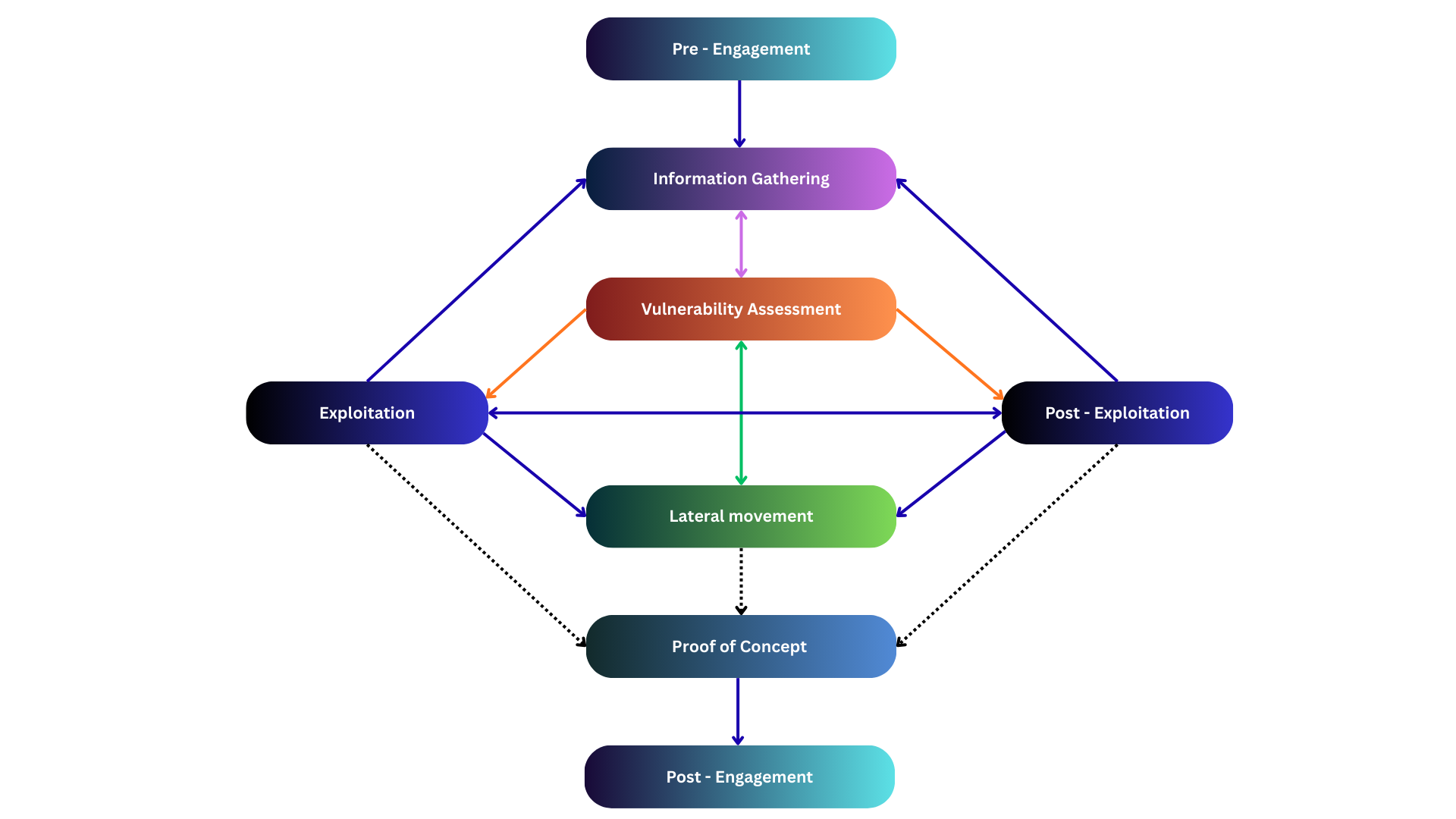
Effective security testing goes beyond automated scanning. It combines manual expert analysis with specialized tools to uncover vulnerabilities that attackers would find in real-world scenarios.

Our testing methodology follows industry-recognized frameworks including OWASP, PTES, and NIST, ensuring thorough coverage across all attack surfaces.

Each engagement produces a detailed report with clear vulnerability descriptions, risk ratings, proof-of-concept evidence, and prioritized remediation guidance.

What Does Comprehensive Security Testing Include? illustration

How Do We Remediate Identified Vulnerabilities?

Identifying vulnerabilities is only the first step. Effective remediation requires clear prioritization, actionable guidance, and verification that fixes are properly implemented.

Our remediation support includes:

  • Risk-based prioritization of findings
  • Detailed technical remediation guidance for each vulnerability
  • Collaboration with your development and IT teams
  • Retesting to verify remediation effectiveness
  • Executive summary reports for management review
How Do We Remediate Identified Vulnerabilities? illustration

Why Is Continuous Security Assessment Important?

New vulnerabilities are discovered daily. Code changes, infrastructure updates, and evolving threat landscapes mean that a system that was secure yesterday may not be secure today.

Continuous security assessment provides ongoing visibility into your security posture through regular testing cycles, vulnerability monitoring, and proactive threat analysis.

  • Regular penetration testing aligned with development cycles
  • Continuous vulnerability monitoring and alerting
  • Trend analysis to track security improvement over time
  • Integration with your CI/CD pipeline for shift-left security
Why Is Continuous Security Assessment Important? illustration

Our Services

Penetration Testing

Expert-led simulated attacks against your infrastructure, applications, and networks to identify exploitable vulnerabilities before real attackers do.

Web Application Security

In-depth testing of web applications following OWASP Top 10 methodology to identify injection flaws, authentication weaknesses, and business logic vulnerabilities.

Mobile App Testing

Security assessment of iOS and Android applications, including data storage, network communication, authentication, and platform-specific vulnerabilities.

Network Assessment

Comprehensive evaluation of internal and external network infrastructure to identify misconfigurations, exposed services, and exploitable entry points.

Source Code Review

Manual and automated review of application source code to identify security flaws, insecure coding patterns, and vulnerabilities at the code level.

Red Team Operations

Advanced adversary simulation that tests your organization's detection and response capabilities through realistic, multi-vector attack scenarios.

Here you'll find the most common and important questions, along with key definitions that help clarify our cybersecurity services and technologies.

A vulnerability scan uses automated tools to identify known vulnerabilities, while a penetration test combines automated scanning with expert manual testing to discover complex attack paths, business logic flaws, and chained vulnerabilities that automated tools miss. Penetration testing provides deeper, more actionable results.

We recommend annual penetration testing as a minimum, with additional testing after significant infrastructure changes, major application updates, or when new systems are deployed. Organizations in high-risk industries or those subject to regulatory requirements may need more frequent testing.

Our testing methodology is designed to minimize operational impact. We coordinate testing schedules with your team, use controlled techniques, and can adjust the scope and intensity based on your operational requirements. Critical systems can be tested during maintenance windows if needed.

Our testing methodology is aligned with industry-recognized frameworks including OWASP Testing Guide, PTES (Penetration Testing Execution Standard), NIST SP 800-115, and OSSTMM. We adapt our approach based on the specific scope and objectives of each engagement.

You receive a comprehensive report that includes an executive summary, detailed technical findings with risk ratings, proof-of-concept evidence for each vulnerability, prioritized remediation recommendations, and a follow-up retesting engagement to verify fixes.

Yes. We provide detailed remediation guidance for every finding and offer hands-on support to help your development and IT teams implement fixes. After remediation, we perform retesting to verify that vulnerabilities have been properly addressed.